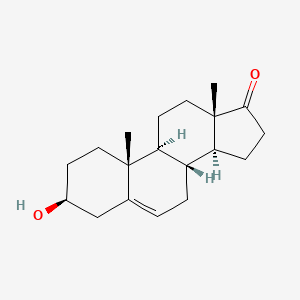
Dehydroepiandrosterone
The most abundant steroid hormone in the human body. A naturally occurring adrenal precursor that converts to testosterone and estradiol in peripheral tissues. Sold OTC in the US as a dietary supplement. Modest effects at physiological doses — used primarily by older adults for age-related testosterone decline. Prohibited by WADA in sport.
Mechanism of Action
Endogenous precursor produced in the adrenal cortex. Converted peripherally via 3β-HSD to androstenedione, then to testosterone (via 17β-HSD) or directly to DHEAS for circulation. The conversion efficiency determines effect magnitude — elderly individuals with low adrenal output see more pronounced effects than younger users with intact adrenal function. Mild direct AR agonism.
Sourcing
Get vetted source suggestions for Dehydroepiandrosterone in our Premium Discord.
Typical Dosing
⚠ Warning Flags
- •WADA prohibited in competitive sport despite OTC status
- •Can elevate PSA — prostate monitoring in older men
- •Estrogenic in some individuals (high aromatase activity)
Effect Profile
Side Effect Profile
Research Studies
Effects of replacement dose of dehydroepiandrosterone in men and women of advancing age
Morales AJ, et al. · 1994
Double-blind crossover: 50 mg/day DHEA for 6 months in men and women aged 40–70 increased IGF-1, improved sense of well-being, and marginally increased lean mass — but absolute anabolic effect was modest compared to exogenous testosterone.
Dehydroepiandrosterone (DHEA), DHEA sulfate, and aging: contribution of the DHEAge Study
Baulieu EE, et al. · 2000
Large multicenter RCT: 12-month DHEA supplementation at 50 mg/day in elderly subjects showed modest improvements in bone mineral density (women) and skin quality with minimal side effects — confirming weak but real biological activity.